Buy gaestehaus.eu ?
We are moving the project
gaestehaus.eu .
Are you interested in purchasing the domain
gaestehaus.eu ?
domain@kv-gmbh.de · 0541-91531010
Buy gaestehaus.eu ?
Is 180 mm of travel too much?
The amount of travel needed depends on the type of riding and terrain. For downhill or aggressive enduro riding, 180 mm of travel is appropriate and can provide the necessary cushioning and control for rough and technical trails. However, for more cross-country or trail riding, 180 mm of travel may be excessive and could result in a less efficient and heavier bike. It's important to consider the specific riding style and terrain when determining the appropriate amount of travel for a bike. **
How can the suspension travel be extended from 100 mm to 120-150 mm?
To extend the suspension travel from 100 mm to 120-150 mm, you can consider upgrading the suspension fork or shock to a model with longer travel. This will involve replacing the existing fork or shock with one that has a longer travel distance. Additionally, you may need to adjust the frame geometry and components to accommodate the longer travel, such as ensuring there is enough clearance for the increased travel and adjusting the bike's handling characteristics. It's important to consult with a professional bike mechanic or suspension specialist to ensure that the upgrade is compatible with your bike and will not compromise its performance or safety. **

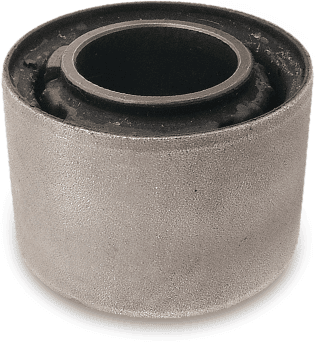
Similar search terms for FEBEST-MM-CU5WRL-Differential-mount
Top-Angebote
Products related to FEBEST-MM-CU5WRL-Differential-mount:
-
FEBEST MAB-109 Differential mountFitting Position: Rear Axle, Rear; Packaging width [cm]: 4,6; Packaging height [cm]: 4,6; Production date to: 200710, 201206, 199808, 200503, 200502, 200511, 200108, 200105, 200706, 200207; for model code: H56A, H58A, H66W, H76W, H67W, H77W; Production date from: 199808, 199904, 2000078,59 £*Shipping: 8,45 £Secure redirect to the provider
-
FEBEST BZAB-054 Differential mountFitting Position: Rear axle middle; Mounting Type: Rubber Mount; Packaging length [cm]: 14,7; Packaging width [cm]: 7,5; Packaging height [cm]: 7,5; for special equipment code: -MA0-MG6, -MA0-MG6+XM0, -MA0-XM0, MG658,99 £*Shipping: 8,45 £Secure redirect to the provider
-
FEBEST HAB-023 Differential mountFitting Position: Rear Axle, Rear; Packaging length [cm]: 11,5; Packaging width [cm]: 8,8; Packaging height [cm]: 7,4; Construction Year from: 01/1988, 01/1990; Construction Year to: 12/1989, 12/1991; Transmission Type: Manual Transmission, 5-Speed Manual Transmission, Automatic Transmission, 4-Speed Automatic Transmission; Vehicle Production Country: Japan; Model Year from: 1988, 1997, 1999; Model Year to: 1991, 2001, 1995; Vehicle Identification Number (VIN) from: 5000001, 1000001; Vehicle Identification Number (VIN) to: 5100000, 7999999, 8099999, 5099999, 1299999, 5199999, 1199999, 1100000, 1399999, 1599999, 1300000, 5499999; for model year: 2001; Number of Doors: 5, 4; Left-/right-hand drive vehicles: for left-hand drive vehicles; Transmission Code: AT; Vehicle Equipment: for vehicles with air conditioning19,49 £*Shipping: 8,45 £Secure redirect to the provider


-
Is a suspension travel of 160 mm sufficient for freeriding or is 180 mm needed?
A suspension travel of 160 mm can be sufficient for freeriding, as it provides a good balance between agility and stability. However, some riders may prefer the additional travel of 180 mm for more aggressive freeriding and to handle larger drops and rougher terrain. Ultimately, the choice between 160 mm and 180 mm suspension travel depends on the rider's personal preferences and the specific type of freeriding they plan to do. **
-
Can the travel be upgraded to 80 mm?
Yes, the travel can be upgraded to 80 mm by replacing the current suspension fork with one that has 80 mm of travel. However, it's important to ensure that the new fork is compatible with the frame and other components of the bike. Additionally, it's recommended to consult with a professional bike mechanic to ensure that the upgrade is done safely and effectively. **
-
What is differential calculus?
Differential calculus is a branch of mathematics that deals with the study of rates at which quantities change. It involves the concept of derivatives, which represent the rate of change of a function at a given point. Differential calculus is used to solve problems involving motion, optimization, and many other real-world applications where understanding how quantities change over time is important. It is a fundamental tool in mathematics and is essential in fields such as physics, engineering, economics, and biology. **
-
What are differential calculations?
Differential calculations involve the process of finding the rate of change of a quantity with respect to another quantity. This can be done using techniques such as differentiation, which involves finding the derivative of a function. These calculations are used in various fields such as physics, engineering, economics, and biology to analyze how one quantity changes in relation to another. Differential calculations are essential for understanding and predicting the behavior of systems and processes in the real world. **


What is differential covariance?
Differential covariance refers to the difference in the covariance between two variables across different groups or conditions. It is used to assess whether the relationship between two variables varies depending on different levels of a third variable. This can help to identify how the strength and direction of the relationship between two variables may change under different circumstances or conditions. Differential covariance is important in understanding how different factors may influence the relationship between variables in a given context. **
What are differential tasks?
Differential tasks are tasks that require different levels of skill, knowledge, or expertise to complete. These tasks are often assigned to individuals based on their abilities and strengths, with the goal of maximizing efficiency and productivity. By assigning differential tasks, organizations can ensure that each task is being completed by the most qualified individual, leading to better overall performance. This approach also allows for the development and utilization of diverse skill sets within a team or organization. **
Top-Angebote
Products related to FEBEST-MM-CU5WRL-Differential-mount:
-
FEBEST MM-H58DM Differential mountFitting Position: Rear Axle; Weight [kg]: 0,15; Packaging length [cm]: 7,0; Packaging width [cm]: 5,2; Packaging height [cm]: 4,6; Production date from: 199909, 199808; Production date to: 200511, 201206, 199808; for model code: H53A, H56A, H58A10,49 £*Shipping: 8,45 £Secure redirect to the provider
-
FEBEST NAB-333 Differential mountWeight [kg]: 0,25; Packaging length [cm]: 5,5; Packaging width [cm]: 5,0; Packaging height [cm]: 5,0; Transmission Type: Automatic Transmission, CVT automatic transmission (stepless); for model code: Z50, U31, J31; Construction Year from: 11/2004, 09/20025,59 £*Shipping: 8,45 £Secure redirect to the provider
-
FEBEST MAB-109 Differential mountFitting Position: Rear Axle, Rear; Packaging width [cm]: 4,6; Packaging height [cm]: 4,6; Production date to: 200710, 201206, 199808, 200503, 200502, 200511, 200108, 200105, 200706, 200207; for model code: H56A, H58A, H66W, H76W, H67W, H77W; Production date from: 199808, 199904, 2000078,59 £*Shipping: 8,45 £Secure redirect to the provider
-
Is 180 mm of travel too much?
The amount of travel needed depends on the type of riding and terrain. For downhill or aggressive enduro riding, 180 mm of travel is appropriate and can provide the necessary cushioning and control for rough and technical trails. However, for more cross-country or trail riding, 180 mm of travel may be excessive and could result in a less efficient and heavier bike. It's important to consider the specific riding style and terrain when determining the appropriate amount of travel for a bike. **
-
How can the suspension travel be extended from 100 mm to 120-150 mm?
To extend the suspension travel from 100 mm to 120-150 mm, you can consider upgrading the suspension fork or shock to a model with longer travel. This will involve replacing the existing fork or shock with one that has a longer travel distance. Additionally, you may need to adjust the frame geometry and components to accommodate the longer travel, such as ensuring there is enough clearance for the increased travel and adjusting the bike's handling characteristics. It's important to consult with a professional bike mechanic or suspension specialist to ensure that the upgrade is compatible with your bike and will not compromise its performance or safety. **
-
Is a suspension travel of 160 mm sufficient for freeriding or is 180 mm needed?
A suspension travel of 160 mm can be sufficient for freeriding, as it provides a good balance between agility and stability. However, some riders may prefer the additional travel of 180 mm for more aggressive freeriding and to handle larger drops and rougher terrain. Ultimately, the choice between 160 mm and 180 mm suspension travel depends on the rider's personal preferences and the specific type of freeriding they plan to do. **
-
Can the travel be upgraded to 80 mm?
Yes, the travel can be upgraded to 80 mm by replacing the current suspension fork with one that has 80 mm of travel. However, it's important to ensure that the new fork is compatible with the frame and other components of the bike. Additionally, it's recommended to consult with a professional bike mechanic to ensure that the upgrade is done safely and effectively. **
Similar search terms for FEBEST-MM-CU5WRL-Differential-mount
-
FEBEST BZAB-054 Differential mountFitting Position: Rear axle middle; Mounting Type: Rubber Mount; Packaging length [cm]: 14,7; Packaging width [cm]: 7,5; Packaging height [cm]: 7,5; for special equipment code: -MA0-MG6, -MA0-MG6+XM0, -MA0-XM0, MG658,99 £*Shipping: 8,45 £Secure redirect to the provider
-
FEBEST HAB-023 Differential mountFitting Position: Rear Axle, Rear; Packaging length [cm]: 11,5; Packaging width [cm]: 8,8; Packaging height [cm]: 7,4; Construction Year from: 01/1988, 01/1990; Construction Year to: 12/1989, 12/1991; Transmission Type: Manual Transmission, 5-Speed Manual Transmission, Automatic Transmission, 4-Speed Automatic Transmission; Vehicle Production Country: Japan; Model Year from: 1988, 1997, 1999; Model Year to: 1991, 2001, 1995; Vehicle Identification Number (VIN) from: 5000001, 1000001; Vehicle Identification Number (VIN) to: 5100000, 7999999, 8099999, 5099999, 1299999, 5199999, 1199999, 1100000, 1399999, 1599999, 1300000, 5499999; for model year: 2001; Number of Doors: 5, 4; Left-/right-hand drive vehicles: for left-hand drive vehicles; Transmission Code: AT; Vehicle Equipment: for vehicles with air conditioning19,49 £*Shipping: 8,45 £Secure redirect to the provider
-
FEBEST HAB-016 Differential mountFitting Position: Rear Axle Upper; Weight [kg]: 0,157; Packaging length [cm]: 8,2; Packaging width [cm]: 8,2; Packaging height [cm]: 2,8; Construction Year from: 01/1988, 01/1990, 01/2008; Construction Year to: 12/1989, 12/1991, 12/2011, 12/2009; Transmission Type: Manual Transmission, 5-Speed Manual Transmission, Automatic Transmission, 4-Speed Automatic Transmission, 5-Speed Automatic Transmission; Vehicle Production Country: Japan, Mexico, USA, Great Britain; Model Year from: 1988, 2012, 1997, 1999, 2007, 2000, 2004, 2005, 1998, 2002, 2015, 2016, 2003; Model Year to: 1991, 2001, 2011, 2005, 2006, 1995, 2010, 2004, 2017, 2016, 2018; Number of Doors: 5, 3, 4; Vehicle Identification Number (VIN) from: 5000001, 1000001, 2000001, 1300001, 3000001, 1200001, 1700001, 1500001, 1100001, 2300001, 1400001, 1250001; Vehicle Identification Number (VIN) to: 5100000, 1199999, 7999999, 1399999, 8299999, 1099999, 1499999, 8199999, 4499999, 4299999, 8099999, 3999999, 1299999, 5299999, 7299999, 5099999, 3099999, 1100000, 8399999, 4999999, 1599999, 9099999, 1300000, 1999999, 3899999, 2399999, 1699999, 3199999, 1249999; Transmission Code: AT, MT; Braking/Driving Dynamics: for vehicles with ABS; for model year: 2005, 2003, 2004, 2014; Left-/right-hand drive vehicles: for left-hand drive vehicles, for right-hand drive vehicles; Vehicle Equipment: for vehicles with air conditioning7,59 £*Shipping: 8,45 £Secure redirect to the provider
-
FEBEST SBMB-002 Differential mountMounting Type: Hydro Mount; Packaging length [cm]: 5,6; Packaging width [cm]: 5,6; Packaging height [cm]: 5,5; Production date to: 201708, 200905, 201411, 200506, 200606, 201109, 201711, 201004, 201011, 201210, 201401, 201206, 201610, 201908, 201807, 200908, 201904, 202007, 202002, 200901; Transmission Code: AT; Production date from: 200712, 200601, 201203, 201110, 200710, 201006, 200503, 200706, 201807, 201905, 20201017,49 £*Shipping: 8,45 £Secure redirect to the provider
-
What is differential calculus?
Differential calculus is a branch of mathematics that deals with the study of rates at which quantities change. It involves the concept of derivatives, which represent the rate of change of a function at a given point. Differential calculus is used to solve problems involving motion, optimization, and many other real-world applications where understanding how quantities change over time is important. It is a fundamental tool in mathematics and is essential in fields such as physics, engineering, economics, and biology. **
-
What are differential calculations?
Differential calculations involve the process of finding the rate of change of a quantity with respect to another quantity. This can be done using techniques such as differentiation, which involves finding the derivative of a function. These calculations are used in various fields such as physics, engineering, economics, and biology to analyze how one quantity changes in relation to another. Differential calculations are essential for understanding and predicting the behavior of systems and processes in the real world. **
-
What is differential covariance?
Differential covariance refers to the difference in the covariance between two variables across different groups or conditions. It is used to assess whether the relationship between two variables varies depending on different levels of a third variable. This can help to identify how the strength and direction of the relationship between two variables may change under different circumstances or conditions. Differential covariance is important in understanding how different factors may influence the relationship between variables in a given context. **
-
What are differential tasks?
Differential tasks are tasks that require different levels of skill, knowledge, or expertise to complete. These tasks are often assigned to individuals based on their abilities and strengths, with the goal of maximizing efficiency and productivity. By assigning differential tasks, organizations can ensure that each task is being completed by the most qualified individual, leading to better overall performance. This approach also allows for the development and utilization of diverse skill sets within a team or organization. **
* All prices are inclusive of VAT and, if applicable, plus shipping costs. The offer information is based on the details provided by the respective shop and is updated through automated processes. Real-time updates do not occur, so deviations can occur in individual cases. ** Note: Parts of this content were created by AI.