Buy gaestehaus.eu ?
We are moving the project
gaestehaus.eu .
Are you interested in purchasing the domain
gaestehaus.eu ?
domain@kv-gmbh.de · 0541-91531010
Buy gaestehaus.eu ?
Can you plant a Scots pine?
Yes, you can plant a Scots pine tree. Scots pine trees are hardy and adaptable, making them suitable for a variety of soil types and growing conditions. When planting a Scots pine, make sure to choose a sunny location with well-draining soil. Water the tree regularly, especially during its first few years of growth, to help establish strong roots. **
How does the reproduction of the Scots pine occur?
The reproduction of the Scots pine occurs through a process called seed dispersal. The tree produces male and female cones, with the male cones releasing pollen that fertilizes the female cones. Once fertilized, the female cones develop seeds that are dispersed by the wind. These seeds can then germinate and grow into new Scots pine trees under suitable conditions, continuing the cycle of reproduction. **
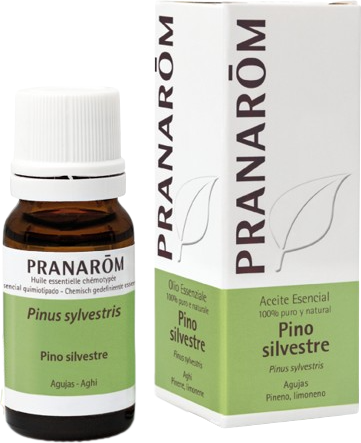
Similar search terms for Pranarom-Scots-Pine-Essential
Top-Angebote
Products related to Pranarom-Scots-Pine-Essential:
-
Integralia Scots Pine Essential Oil Eco 15 mlNutrition and Supplements Natural Extracts Integralia Scots Pine Essential Oil Eco 15 ml Scots pine essential oil. Directions for use: Do not ingest directly. Daily intake: 1 to 3 drops, always diluted in liquids (3 drops are equivalent to 67.5 mg).6,08 £*Shipping: 3,99 £Secure redirect to the provider
-
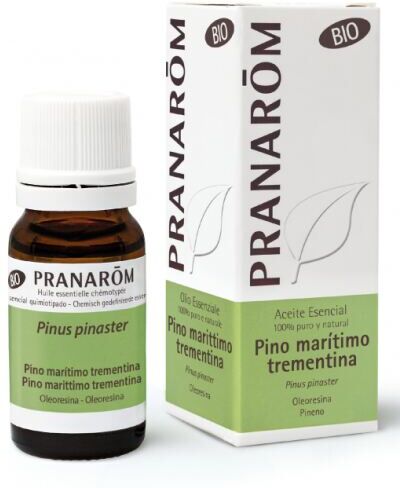
Pranarom Maritime Pine Essential Oil Bio 10 mlNutrition and Supplements Natural Extracts Pranarom Maritime Pine Essential Oil Bio 10 ml Turpentine essential oil is obtained by distilling maritime pine resin. It is very rich in terpenes. Properties - Expectorants - Anti-colds - Stimulating and energizing. Dosage Take 1 drop a day on a neutral support (40mg) Precautions: Consult a healthcare professional. Keep out of reach of young children. This product does not replace a varied and balanced diet or a healthy lifestyle. Do not exceed the recommended dose. Do not use during pregnancy, breastfeeding, or in children under 6 years of age. Keep away from all sources of heat and light.3,63 £*Shipping: 3,99 £Secure redirect to the provider
-
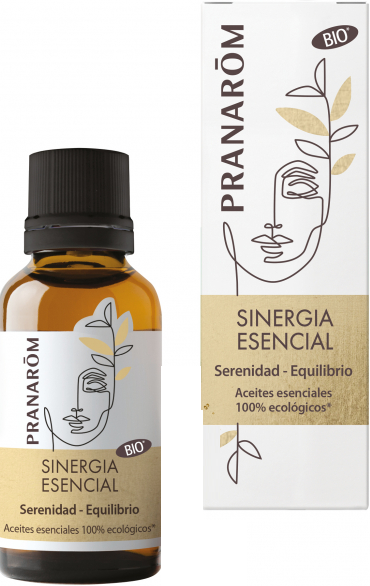
Pranarom Essential Synergy Essential Oil 30 mlHealth and Beauty Creams Pranarom Essential Synergy Essential Oil 30 ml Prana is the breath of life, something essential. It is breathing, inhaling, and exhaling the essential energy of life. A unique multifunctional synergy with certified organic essential oils, the result of 30 years of experience. The essence synergy cares for both the skin and the mind , as it calms , relaxes , and balances . It contains essential oils that enhance each other, combining their properties and offering a return to balance and serenity. Use the essential synergy on the body, hair or through olfactory means. Dosage Dilute one drop of the essential synergy in 10 drops of a Pranarôm plant oil or a bit of neutral cleansing cream or gel. Before applying this synergy to your skin, warm it between your hands, cup them together to cover your nose, and take a long, deep breath. This way, you can benefit from its relaxing properties.21,80 £*Shipping: 3,99 £Secure redirect to the provider
-
Pranarom Frankincense Essential Oil 5 mlHealth and Beauty First aid kit Pranarom Frankincense Essential Oil 5 ml The best source of this essential oil is Yemen, a place steeped in history and the home of the Queen of Sheba. Incense has always been used in numerous ritual ceremonies, and in aromatherapy it is used for its healing and fungicidal properties, and to promote meditative states. It should be noted that the term incense currently inadequately covers a large number of burning items. Known since ancient times as the "king of oils" for its incredible properties, frankincense is an excellent antiseptic, anti-inflammatory, and antifungal agent, ideal for wound healing. It's also an ideal skin healer, helping relieve dryness and treat wrinkles, blemishes, scars, and stretch marks. Tips & Tricks: - 3 drops of AEQT Incense on burning charcoal make it easier to reach meditative states. Tips : In massage, a few drops diluted in a vegetable oil for local application. - Oral use. - Cutaneous use. - Atmospheric diffusion. - Aerosol inhalation. - Use with caution. Precautions : - Keep out of reach of small children. - It is advisable to follow a varied and balanced diet and lead a healthy lifestyle. - Do not exceed the recommended dose. - Caution during pregnancy, breastfeeding, or in children under 3 years of age. - Keep away from all sources of heat and light.9,93 £*Shipping: 3,99 £Secure redirect to the provider


-
What is the comparison between European beech and Scots pine?
European beech and Scots pine are both popular tree species in Europe, but they have some key differences. European beech trees have smooth, grey bark and produce dense, dark green foliage, while Scots pine trees have reddish-brown bark and bear long, thin needles. European beech trees are known for their broad, spreading canopy, while Scots pine trees have a more conical shape. Additionally, European beech trees prefer moist, well-drained soil, while Scots pine trees are more tolerant of dry, sandy conditions. **
-
How can the growth of the Scots pine be regulated?
The growth of Scots pine can be regulated through various methods such as pruning, thinning, and fertilization. Pruning can help control the shape and size of the tree by removing unwanted branches. Thinning involves selectively removing some of the trees in a stand to reduce competition for resources and promote healthier growth. Fertilization can also be used to provide the tree with essential nutrients, which can help regulate its growth. Additionally, controlling the tree's exposure to sunlight and water can also impact its growth. **
-
What is the physiological and ecological potential of the Scots pine?
The Scots pine (Pinus sylvestris) has a high physiological potential due to its ability to adapt to a wide range of environmental conditions, including poor soils and harsh climates. It is well-suited to cold and dry climates, making it a valuable species for reforestation and afforestation projects in northern regions. Ecologically, the Scots pine plays a crucial role in supporting biodiversity by providing habitat for various species and contributing to ecosystem stability. Its long lifespan and ability to regenerate after disturbances also make it an important component of forest ecosystems. Overall, the Scots pine has the potential to contribute to ecosystem resilience and provide valuable ecosystem services. **
-
Why do Scots pine and beech not occur in the same location?
Scots pine and beech do not occur in the same location because they have different ecological requirements. Scots pine thrives in acidic, nutrient-poor soils and is well-adapted to harsh, dry conditions, while beech prefers fertile, well-drained soils with higher moisture levels. Additionally, Scots pine is more tolerant of cold temperatures and can be found at higher elevations, while beech is more sensitive to frost and is typically found at lower elevations. These differences in habitat preferences result in the two species occupying different ecological niches and not occurring together in the same location. **

Why do Scots pine and European beech not occur in the same location?
Scots pine and European beech do not occur in the same location because they have different ecological requirements. Scots pine thrives in dry, sandy soils and is well-adapted to tolerate harsh environmental conditions such as cold temperatures and strong winds. On the other hand, European beech prefers moist, well-drained soils and is more sensitive to harsh environmental conditions. Therefore, their differing soil and climate preferences result in their separate distribution patterns, with Scots pine dominating in drier, harsher environments and European beech in moister, more sheltered locations. **
What is the distribution of the pedunculate oak and the Scots pine in relation to their ecology?
The pedunculate oak (Quercus robur) is native to most of Europe and is commonly found in mixed deciduous forests, where it thrives in moist, well-drained soils. It is also found in lowland areas and can tolerate a wide range of soil types. On the other hand, the Scots pine (Pinus sylvestris) is native to northern Europe and is commonly found in boreal forests, where it thrives in well-drained, acidic soils. It is also found in mountainous regions and can tolerate harsh environmental conditions such as cold temperatures and strong winds. Overall, the pedunculate oak is more widely distributed across Europe, while the Scots pine is more restricted to northern and mountainous regions. **
Top-Angebote
Products related to Pranarom-Scots-Pine-Essential:
-
Pranarom Scots Pine Essential Oil 10 mlHealth and Beauty First aid kit Pranarom Scots Pine Essential Oil 10 ml The Scots pine produces an essential oil long known to our grandmothers, who in ancient times inhaled this essential oil from northern climates to benefit from its balsamic effect on the bronchial tubes. It grows in the mountains, in sandy or gravelly soils. It has purple-gray bark, stiff needle-like leaves, with yellow male flowers, red female flowers, and a green ovoid cone that tends to brown when ripe. Fields of application: Joints and muscles. Urinary tract. Circulatory comfort. Atmospheric diffusion. Dosage: Take 1 drop on a neutral surface 3 times a day. Maximum recommended daily dose of oil: 3 drops - 100 mg. Precautions: • Ask a health professional for advice. • Keep out of reach of small children. • It does not replace a varied and balanced diet or a healthy lifestyle. • Do not exceed the recommended dose. • Do not use during pregnancy, breastfeeding, or in children under 6 years of age. • Keep away from all sources of heat and light.7,03 £*Shipping: 3,99 £Secure redirect to the provider
-
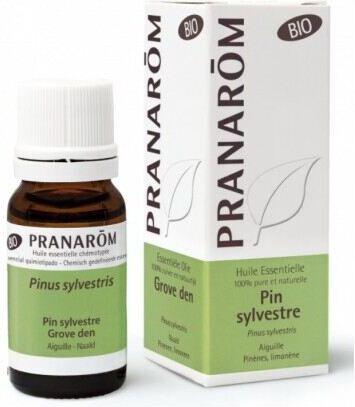
Pranarom Organic Scots Pine Essential Oil 10 ml 10 mlNutrition and Supplements Natural Extracts Pranarom Organic Scots Pine Essential Oil 10 ml 10 ml Scots pine produces an essential oil long known by our grandmothers who, in ancient times, inhaled this essential oil from Nordic climates to benefit from its balsamic action on the bronchi. It grows in the mountains, in sandy or gravel soils. It has a purple-gray bark, rigid needle-like leaves, with yellow male flowers, red female flowers and a green ovoid cone that tends to brown when mature. Fields of application Purifier - Joints and muscles - Urinary tract - Circulatory comfort Dosage Ingest 1 drop on a neutral support 3 times a day. Maximum recommended daily dose of oil: 3 drops - 100 mg Tips "Formula to diffuse and obtain purified air during winter: 20 drops AEQT Scots pine + 20 drops AEQT Palo de Hô + 20 drops AEQT Ravintsara + 40 drops of lemon essence. 6 to 8 drops of this synergy in the water of an ultrasonic diffuser for 30 minutes in continuous mode or for 2 hours in discontinuous mode. 2 to 3 times a day depending on the presence of people and the risk of contagion."7,31 £*Shipping: 3,99 £Secure redirect to the provider
-
Integralia Scots Pine Essential Oil Eco 15 mlNutrition and Supplements Natural Extracts Integralia Scots Pine Essential Oil Eco 15 ml Scots pine essential oil. Directions for use: Do not ingest directly. Daily intake: 1 to 3 drops, always diluted in liquids (3 drops are equivalent to 67.5 mg).6,08 £*Shipping: 3,99 £Secure redirect to the provider
-
Pranarom Maritime Pine Essential Oil Bio 10 mlNutrition and Supplements Natural Extracts Pranarom Maritime Pine Essential Oil Bio 10 ml Turpentine essential oil is obtained by distilling maritime pine resin. It is very rich in terpenes. Properties - Expectorants - Anti-colds - Stimulating and energizing. Dosage Take 1 drop a day on a neutral support (40mg) Precautions: Consult a healthcare professional. Keep out of reach of young children. This product does not replace a varied and balanced diet or a healthy lifestyle. Do not exceed the recommended dose. Do not use during pregnancy, breastfeeding, or in children under 6 years of age. Keep away from all sources of heat and light.3,63 £*Shipping: 3,99 £Secure redirect to the provider
-
Can you plant a Scots pine?
Yes, you can plant a Scots pine tree. Scots pine trees are hardy and adaptable, making them suitable for a variety of soil types and growing conditions. When planting a Scots pine, make sure to choose a sunny location with well-draining soil. Water the tree regularly, especially during its first few years of growth, to help establish strong roots. **
-
How does the reproduction of the Scots pine occur?
The reproduction of the Scots pine occurs through a process called seed dispersal. The tree produces male and female cones, with the male cones releasing pollen that fertilizes the female cones. Once fertilized, the female cones develop seeds that are dispersed by the wind. These seeds can then germinate and grow into new Scots pine trees under suitable conditions, continuing the cycle of reproduction. **
-
What is the comparison between European beech and Scots pine?
European beech and Scots pine are both popular tree species in Europe, but they have some key differences. European beech trees have smooth, grey bark and produce dense, dark green foliage, while Scots pine trees have reddish-brown bark and bear long, thin needles. European beech trees are known for their broad, spreading canopy, while Scots pine trees have a more conical shape. Additionally, European beech trees prefer moist, well-drained soil, while Scots pine trees are more tolerant of dry, sandy conditions. **
-
How can the growth of the Scots pine be regulated?
The growth of Scots pine can be regulated through various methods such as pruning, thinning, and fertilization. Pruning can help control the shape and size of the tree by removing unwanted branches. Thinning involves selectively removing some of the trees in a stand to reduce competition for resources and promote healthier growth. Fertilization can also be used to provide the tree with essential nutrients, which can help regulate its growth. Additionally, controlling the tree's exposure to sunlight and water can also impact its growth. **
Similar search terms for Pranarom-Scots-Pine-Essential
-
Pranarom Essential Synergy Essential Oil 30 mlHealth and Beauty Creams Pranarom Essential Synergy Essential Oil 30 ml Prana is the breath of life, something essential. It is breathing, inhaling, and exhaling the essential energy of life. A unique multifunctional synergy with certified organic essential oils, the result of 30 years of experience. The essence synergy cares for both the skin and the mind , as it calms , relaxes , and balances . It contains essential oils that enhance each other, combining their properties and offering a return to balance and serenity. Use the essential synergy on the body, hair or through olfactory means. Dosage Dilute one drop of the essential synergy in 10 drops of a Pranarôm plant oil or a bit of neutral cleansing cream or gel. Before applying this synergy to your skin, warm it between your hands, cup them together to cover your nose, and take a long, deep breath. This way, you can benefit from its relaxing properties.21,80 £*Shipping: 3,99 £Secure redirect to the provider
-
Pranarom Frankincense Essential Oil 5 mlHealth and Beauty First aid kit Pranarom Frankincense Essential Oil 5 ml The best source of this essential oil is Yemen, a place steeped in history and the home of the Queen of Sheba. Incense has always been used in numerous ritual ceremonies, and in aromatherapy it is used for its healing and fungicidal properties, and to promote meditative states. It should be noted that the term incense currently inadequately covers a large number of burning items. Known since ancient times as the "king of oils" for its incredible properties, frankincense is an excellent antiseptic, anti-inflammatory, and antifungal agent, ideal for wound healing. It's also an ideal skin healer, helping relieve dryness and treat wrinkles, blemishes, scars, and stretch marks. Tips & Tricks: - 3 drops of AEQT Incense on burning charcoal make it easier to reach meditative states. Tips : In massage, a few drops diluted in a vegetable oil for local application. - Oral use. - Cutaneous use. - Atmospheric diffusion. - Aerosol inhalation. - Use with caution. Precautions : - Keep out of reach of small children. - It is advisable to follow a varied and balanced diet and lead a healthy lifestyle. - Do not exceed the recommended dose. - Caution during pregnancy, breastfeeding, or in children under 3 years of age. - Keep away from all sources of heat and light.9,93 £*Shipping: 3,99 £Secure redirect to the provider
-
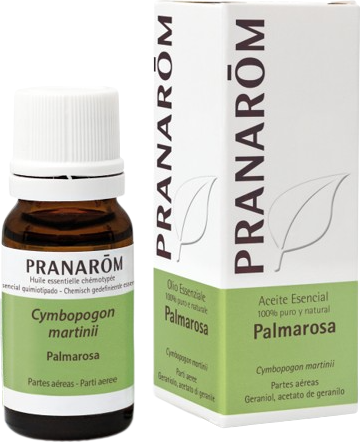
Pranarom Palmarosa Essential Oil 10 mlHealth and Beauty Respiratory Care Pranarom Palmarosa Essential Oil 10 ml This herb of Indian origin has long, narrow leaves and linear inflorescences. With a very pleasant fragrance, this essential oil is ideal for all fungal, cicatricial, and eczematous skin conditions. It is surely one of the top 10 essential oils. Fields of application Breathing - Bite Prevention - Urinary Tract - Sleep and Relaxation - Beauty Care Dosage: Take 1 drop on a neutral support 3 times a day. Maximum recommended daily dose of oil: 3 drops - 120 mg. Tips: 1 drop of AEQT Palmarosa + 1 drop of AEQT Rosemary chemotype verbenone daily in your day cream will regulate sebum secretion, moisturize the skin and promote skin cell regeneration.4,94 £*Shipping: 3,99 £Secure redirect to the provider
-
Pranarom Carrot Essential Oil 5 mlHealth and Beauty Treatments Pranarom Carrot Essential Oil 5 ml This herbaceous plant is known for its orange, fleshy, and slightly woody roots. The stem has many branches with very fine leaves and white or pink flowers arranged in aerial umbels, very characteristic of this botanical family. Fields of application: Digestion and intestinal health - Skin care - Cleansing and weight loss treatment. Dosage: 2 drops 3 times a day on a neutral support. (150 mg) Tips: 4 drops AEQT Carrot + 4 drops AEQT Rockrose (cistus ladanefer) in 10 ml AV calendula reduces couperose, 2 applications a day until improvement is seen. Precautions: • Keep out of reach of small children. • It is advisable to follow a varied and balanced diet and lead a healthy lifestyle. • Do not exceed the recommended dose. • Except under the advice of an expert, do not use during pregnancy, breastfeeding, or in children under 3 years of age. • Keep away from all sources of heat and light.10,57 £*Shipping: 3,99 £Secure redirect to the provider
-
What is the physiological and ecological potential of the Scots pine?
The Scots pine (Pinus sylvestris) has a high physiological potential due to its ability to adapt to a wide range of environmental conditions, including poor soils and harsh climates. It is well-suited to cold and dry climates, making it a valuable species for reforestation and afforestation projects in northern regions. Ecologically, the Scots pine plays a crucial role in supporting biodiversity by providing habitat for various species and contributing to ecosystem stability. Its long lifespan and ability to regenerate after disturbances also make it an important component of forest ecosystems. Overall, the Scots pine has the potential to contribute to ecosystem resilience and provide valuable ecosystem services. **
-
Why do Scots pine and beech not occur in the same location?
Scots pine and beech do not occur in the same location because they have different ecological requirements. Scots pine thrives in acidic, nutrient-poor soils and is well-adapted to harsh, dry conditions, while beech prefers fertile, well-drained soils with higher moisture levels. Additionally, Scots pine is more tolerant of cold temperatures and can be found at higher elevations, while beech is more sensitive to frost and is typically found at lower elevations. These differences in habitat preferences result in the two species occupying different ecological niches and not occurring together in the same location. **
-
Why do Scots pine and European beech not occur in the same location?
Scots pine and European beech do not occur in the same location because they have different ecological requirements. Scots pine thrives in dry, sandy soils and is well-adapted to tolerate harsh environmental conditions such as cold temperatures and strong winds. On the other hand, European beech prefers moist, well-drained soils and is more sensitive to harsh environmental conditions. Therefore, their differing soil and climate preferences result in their separate distribution patterns, with Scots pine dominating in drier, harsher environments and European beech in moister, more sheltered locations. **
-
What is the distribution of the pedunculate oak and the Scots pine in relation to their ecology?
The pedunculate oak (Quercus robur) is native to most of Europe and is commonly found in mixed deciduous forests, where it thrives in moist, well-drained soils. It is also found in lowland areas and can tolerate a wide range of soil types. On the other hand, the Scots pine (Pinus sylvestris) is native to northern Europe and is commonly found in boreal forests, where it thrives in well-drained, acidic soils. It is also found in mountainous regions and can tolerate harsh environmental conditions such as cold temperatures and strong winds. Overall, the pedunculate oak is more widely distributed across Europe, while the Scots pine is more restricted to northern and mountainous regions. **
* All prices are inclusive of VAT and, if applicable, plus shipping costs. The offer information is based on the details provided by the respective shop and is updated through automated processes. Real-time updates do not occur, so deviations can occur in individual cases. ** Note: Parts of this content were created by AI.